The XXth century was the century of ideologies and destruction. Communism entered the stage in 1917 and died almost immediately, fascism too disappeared within the concentration camps, a dozen years after its first implementation.
After the fall of the Berlin wall and the collapse of the Soviet Union, a single ideology was left, centered in the US empire and affecting the whole world: liberalism along with its corollary dogmas like individualism, materialism, atheism, and nihilism which together have brought humanity to the brink of oblivion.
Despite their obvious pro imperial bias, every day the mainstream media provides additional proof of the utter disaster that is going on around our planet and the ongoing disintegration of individuals and societies.
 In previous articles I repeatedly wrote about the nefarious effects of liberalism spread by the US empire: the destruction of beauty, family, gender, identity, moral consciousness, religions, and so forth. Basically, all the features that define our very identity as humans are being systematically twisted, reversed, destroyed.
While it's a necessary exercise to be fully aware of the inanity of imperialism, it remains incomplete. To paraphrase Albert Camus, the revolted man says 'no' to the existing world but he also says yes to something else, to a better world. So, the next natural step is to propose an alternative: a new political and social model that deeply resonates with the human values we all must embrace.
This is an exercise of thought and also an exercise of hope, and there's not much to lose, because no matter how imperfect this sociopolitical model is, it's unlikely to be as destructive as its predecessors, no matter how hard we try!
The idea to write this article came from a discussion on our forum titled "Hope, fear, and the future". One of Joe Quinn's contributions in this thread brought to light a key point: This idea grew further while reading Alexander Dugin's excellent work: "the fourth political theory". There are several similarities between both models. But, unlike Dugin who proposes a strategy to transition from the current liberal world to his fourth political model, we solely focus here on the specifics of our ideal world after transition. That's why our model is called "postimperialism".
Our hypothesis is that the US empire will soon collapse and may bring with it most of the planet. This global catastrophe may be due to intervention of the human and/or cosmic variety. Postimperialism proposes a model of society that could flourish after this major reset.

Bilbo Baggins' house in the Shire
So the task here was no less than figuring out the organization of an ideal society. All I could come up with was a rather naive image similar to Bilbo's village in Lord of the Rings. I was certainly aware of many shortcomings of the current system but what were the best ways to remedy it? So, as usual, sitting around the kitchen table, I began to ask about this or that point and others would suggest solutions.
I was surprised to see how much thought all of us had already given to this topic, and how much extra thinking we gave during those conversations. It suggests that indeed there's a deep craving in all of us for a better world, and that it goes beyond a mere unrealistic dream. Indeed, you will find below many very operational and concrete ideas that are definitely worth testing.
So this is the way we came up with the features of our ideal society. This is, by definition, an incomplete work that must evolve in an organic way. It's a first step aimed at planting a seed in the reader's mind and encouraging him/her to think about this ideal world. And let's face it: every great (and not-so great) achievement in this world started with an idea, a flash of imagination or inspiration that informed the process that became the foundation of its realization.
Postimperialism at a glance
Despite the obvious destructive effects of communism, capitalism and socialism, we should not throw the baby out with the bathwater. Our 'post-imperialism' aims to keep the positive aspects of any of the past ideologies while, of course, discarding their destructive constituents.
Let's also keep in mind that the nefarious effects of said ideologies may be due less to their intrinsic nature than to the way they were applied to societies by pathological leaders.
At a business level a form of controlled capitalism prevails. Regulations prevent the usual pitfalls of past capitalism, namely speculation, monopolies, lobbying, industrial pollution, programmed obsolescence, unethical advertising, capital/labor imbalance. Within this regulatory framework, fair trade and supply and demand rule the exchange of goods and services, while the weight of bureaucracy is kept to a minimum in order to ensure fluid, quick and efficient business activities.
At a state level, post-imperialism implements a mostly socialistic policy. Taxes fund a welfare state, that redistributes wealth and offers free education, health care and transportation. It also controls key industrial sectors like energy and mining. The state aims to create the best legal, administrative and fiscal environment for communities to develop harmoniously
At a community level, a positive form of communism is applied. Communities are the core constituent of the postimperialistic society. They are highly autonomous, raise their taxes, own lands and building and have their own militia and government and are therefore the core unit of society. The most important feature of post-imperialistic communities, however, may be immaterial and relate to the very high level of cooperation, help, sharing, trust and solidarity that would prevail between each of its members.
So let's start our transcription of the Q&A sessions with this topic of communities. Comments developing the proposed solutions and/or comparing them with the current state of the world have been added to some answers.
Community and family life

Kowloon walled city (Hong Kong) hosted 33000 residents over 6.4 acres.
Q: Is demographic limited?
A: Demographic density is limited. If a community reaches the maximum density, a couple planning to have babies will have to move to a less populated area. The population of communities is also limited to 3,000 individuals, allowing everyone to know everyone else. Such a size should allow a critical mass of necessary and complementary skills. Q: Are the communities autonomous relative to the state?
A: Yes. The state defines a broad legal framework, communities are free to set rules and customs as long as they are compliant with this framework. Communities, as extended local families, are the fundamental unit of the post-imperialist society. Q: Are there armies?
A: Yes. each community has its own militia. Only members of the community can become soldiers. They'll train 1 weekend per month and 2 weeks in summer. Communities may provide troops to act in the name of the state for a specific mandate and a specific duration, but also retain the right to refuse involvement in collective military action. Q: Since states don't have armies they can't start war, but what about communities that do have militias can they start a war?
A: Any community leaders who exhibit consistent belligerent behavior will be removed from power by the collective action of other communities. Citizens will be asked to elect a new representative. If a belligerent leader is elected again, he will be removed from power, an inquiry will be conducted to identify the cause of belligerence. One remedy to further belligerence is to disperse the belligerent community in other communities that are far away from one another. Q: Are there women in the army?
A: Yes, but women can't have a position requiring over-strenuous physical efforts. The same applies to any working position.
Q: What about other leisure activities?
A: Club activities are an important part of community life. Communities offer a variety of clubs (arts, sports, hobbies). The focus being enjoyment, learning, bonding.
 Q: Are there activities between communities?
A: Yes. Parades, parties, exchanges, exhibitions, meals, heroes celebrations etc. are organized at an inter-community level. Q: Is there any meditation/inner reflection activity?
A: Yes; Such activity is conducted at a community level. Regular meetings are offered. Classes are organized according to age/seniority groups. Q: Is there any sport in post-imperialism?
A: Yes, but it is exclusively a leisure activity. No money is involved, no community 'points' can be earned. The cultural norms lessen the competitive dimension of community life and reinforce the cooperative/leisure/health aspects. Sport activities are mostly conducted at a community level.
Q: What are the rules concerning marriage and procreation?
A: Procreation occurs at a physical level while marriage should be at a soul level. Thus anyone can marry anyone and divorce is legal. However only heterosexual married couples can adopt children and raise them. Before having children, heterosexual married couples have to attend parenting classes and go through a 5 year probation period as a general rule.

Most of our psychological make-up is defined by our earliest experiences. Nurturing and bonding are prime causes of psychological health.
Q: Is there any maternity leave?
A: Yes, mothers have a 3 years leave during which they still receive their salary. Q: Can you marry outside your community or country?
A: Yes. In this case the couple may choose in which community/country they live. If necessary, the 'foreign' spouse' will be encouraged to learn the local language. Q: Can an individual move from one community to another one?
A: Yes, but the destination community must accept his application and before that it must take notice of the report written by the mother community about the applicant. Only individuals with a sufficient number of community points can apply to the transfer process. Money, loans and banking
Q: In Post-imperialism, is there any money?
A: Yes but its use is restricted to trade. Its accumulation is limited and it can't be used for speculative purposes. There's one single gold-backed currency for the whole world. States have the exclusive right of creating money and lend it without interest to the communities. The communities lend to businesses without interest. Interest doesn't have to be paid because the companies benefit the community through added value, job creation and taxes.

Until 1971, the US dollar was backed by gold or silver
Q: Is there any bartering?
A: Yes. Transactions that are instantaneous and local do not require the use of currency. Such transactions are common since local trade (within one community or between nearby communities) is highly encouraged. It reduces pollution and delays.
In addition, community trading systems are available. They use interest-free local credit so direct swaps do not need to be made. For instance, a member may earn credit by doing childcare for one person and spend it later on carpentry with another person in the same network. Transactions are recorded in a central location open to all members. Q: Is there a stock market?
A: No, prices (commodities, manufactured goods, services...) are simply defined by the agreement between buyer and seller. Q: Can individuals borrow money?

Marketplace Carmaux, France.
Until recently, the Church and the marketplace where the main socializing places.
A: No. If they want to buy a house it's the family/part of the community that will pool together the funds required for the purchase. Thus most houses will be family/community houses.
Q: Are there banks in post-imperialism?
A: There are only local branches of the state owned central bank. Any speculative activity is prohibited. Cash is used as well as checks and debit cards. Credit cards are prohibited. Q: Is there any tax?
A: Yes. The same 10% flat tax rate is applied to businesses and citizens alike. Work & Businesses

Since 1972, wages are dropping while corporate profits are rising
Q: Is there a maximum size for companies?
A: Yes, the maximum size will be defined according to the size of the market, economies of scale, labor intensity, number of employees, profitability. As a general rule, companies will be family-sized. This maximum size will de facto create a profit cap and limit the dis-balance between capital and labor. Q: Who owns the capital?
A: Companies are exclusively owned by members of the community. Shares are distributed according to the input of each founding member. Input is not restricted to money, but can also take the form of ideas, labor, assets, expertise, etc. Q: Where does international trade occur?
A: There are marketplaces like Amazon but they are publicly owned.

Time Square, New York City.
Q: Is advertising allowed?
A: Yes, but its content is limited to objective facts about the products. Billboards can only be placed on the advertiser's rented land and their maximum size is limited. Companies can print leaflets and commercial magazines and distribute them. Q: Is there TV?
A: Yes. TV is publicly owned. There is no advertising. Channels deliver educational, inspiring, entertaining programs within a socially acceptable context. Q: How is industrial production organized?
A: As a general rule, mechanization is limited. There should be at least 50% direct human intervention in any production process. Below this level production is too dehumanized. Q: What are the working conditions?
A: All workers have the same salary. Equivalent to the purchase power of 2000 euros in the countryside of Western Europe. People work 5 hours per day, 5 days a week. In addition 1/2 day is dedicated to community work. Q: Are there any holidays?
A: Yes. In addition to regular weekends, there is one 3-day weekend every month. Every worker has 3 weeks (21 days) of paid holidays per year in addition to community/national holidays. Within companies, holidays are scattered in order not to disrupt production flows. Workers with the highest number of community points have the first pick.
Children have 1 week holiday from school every three months and in addition do not attend school during their parents holidays. Q: What about retirement?
A: Minimum retirement age is 55 years old, but it is optional and any individual can decide to work longer. During his career, the worker gives 3% of his income to a retirement fund. This funds invest the collected money as follows: 20% in community business, 80% in the gold-backed currency.
 Q: Who owns the media?
A: The media is controlled by people through the state. Journalists are voted by people through the state. Only people having reached moral and technical qualifications can be candidates. Witnesses and elders feedback are part of the evaluation process. The profession is sacrosanct, journalists have total freedom to tell the truth, but if they breach this fundamental rule, penalties are doubled compared to a "normal" citizen. Q: How does the health industry work?
A: No private company is allowed to operate in the health sector. Hospitals, clinics, research labs etc. are publicly owned and operated. Doctors are public servants. During their studies doctors are exposed to a holistic approach, mind-body connection, psychology, natural remedies. Becoming a doctors leads to the attribution of community points. Good doctors (as evaluated by patients) receive more community points. Q: Is production of goods driven by profit maximization?
A: No, the only goods that can be produced should meet standards of functionality, durability and beauty. They also have to comply with the 50% direct human work rule. Profit and wealth will not be a driver because on a cultural level they will not be glorified anymore. The main value will be contribution to the community. Q: Is growth rate an end?
A: No. Quality matters, not quantity. One of the reasons why the Empire collapsed was the exhaustion and pollution of natural resources due to overuse. In post-imperialism there is a general policy of conservation. Natural resources are gifts from the Earth. They are precious and can only be used in a lasting, careful and respectful ways. Q: Can private operators exploit natural resources?
A: Natural resources are publicly owned. No private profit can be extracted from the exploitation of the planet's resources.

The centennial light bulb runs since 1901.
Q: Are there still some of those mass produced plastic junk objects?
A: No. Anything produced in post-imperialism must comply with standards of functionality, durability and aesthetics. Besides mass production won't be possible because of the cap on company sizes.
Q: Is there some kind of profit cap or wealth cap?
A: Profit is naturally limited because the size of companies is limited. There's no wealth cap per se but there is death duty. If the estate owned by a citizen is more than three times larger than the average estate in his community, death duty will be 50% of the amount above three times the average estate. Half the funds collected this way go to the state (education, health, infrastructures...), the other half goes to the community. Supranational and national levels
Q: How are the borders of a nation defined?
A: Within a nation, the same language and culture are shared. The size of nations is limited to a maximum of 3 million citizens.
 Q: Are the nations similar to each other?
A: Yes they all follow the same fundamentals of conscience but differ on the cultural level (language, rites, traditions, heroes,...)
Q: Are there supranational entities?
A: Yes. Its mission is to maintain a fair balance between the nations. It doesn't have its own army but receives contributions of troops from member nations for a specific mandate and time. Voting is anonymous to discourage any form of pressure. Each nation has two representatives. The organization acts a sheriff of the planet and insures that each country behaves in a fair way relative to other countries.
Q: How autonomous are nations relative to the supranational entity?
A: Apart from the point mentioned above, nations are totally free to make their own decisions. All nations share a very similar moral consciousness and value set. Within this moral framework each nation, depending on its history, culture, language and traditions, makes social and legal decisions in harmony with the cultural specifics of the nation. Individuals
Q: How is psychopathy dealt with?
A: Serious research is conducted on this topic. Particularly the diagnosis. There is strong parent training and community help to insure that every citizens has a good knowledge of the topic. Also the limited size of communities, nations and companies should help spot psychopaths. Now, how to deal with psychopaths once spotted is a very problematic and fundamental question. The proper solution is still a work in progress.
 Q: Are there heroes?
A: Definitely yes. Heroes are a fundamental part of culture. They are duly celebrated. But unlike modern society were psychopathic traits are glorified, it will be outstanding contributions to the community that will make a hero. Heroes can be celebrated at a community level, national level or international level. Q: Is school compulsory?
Yes. It is compulsory from 9 to 12. It provides the basic writing, reading and calculus skills. Then from 12 to 18, youngsters test what they like AND are good at. It occurs mostly through internship and practice. Of course any individual is free to study before of after compulsory ages. The mentor/ apprentice relationship is privileged. Q: What about computers?
A: Computers are still used but are dedicated to the acquisition of knowledge and communication.
Q: Is there an international language?
A: Yes. Any individual involved in an international activity has to be proficient. All citizens learn the international language at school.
Q: What happens to people who want to get a job but don't manage to?
Those people are helped by their family. If they don't have any family they will join houses for family-less individuals and join a 'family' of interest/value in there. Q: Can people own guns?
A: Citizens who have earned enough community points are allowed to own guns. Q: Are there recreational drugs?
A: Yes but only inside a walled 'drug' enclave. The production and sale of drugs is publicly owned. Drug users are free to go and stay in the enclave. As a general rule activities in the enclave can't generate community points.
Q: Is there prostitution?
A: Yes. Communities insure a reasonable level of security and hygiene for prostitutes and clients. Prostitution only occurs in a walled enclave and no community points can be earned in this enclave. Q: How is euthanasia handled?
A: If an individual is mentally apt and deems his suffering as unbearable, he can choose to be euthanized. The euthanasia methods that are the least painful will be proposed to him and he will choose the one he finds the most suitable.
Q: What about individuals who are not mentally apt?
A: If the family is willing to take care of the individual (with help of the community and state), he/she will be provided for indefinitely, but will be sterilized.
Q: What about suicide?
A: Suicide is handled in a way similar to euthanasia. Q: Is there any religion is post imperialism?
A: There's no religion per se but science has a strong focus on what is called the paranormal or metaphysics. This research identifies the rites and activities that strengthen the psychic connection between individuals and higher realities.

Outfit created by fashion designer Alexander Mc Queen
Q: Is there a dress-code?
A: No, but any wastefulness is discouraged. There is no fashion industry which creates artificial obsolescence. As for other products, clothes are functional, durable and beautiful. Laws and regulations
Q: What happens to individuals who do not want to work?
A: They are expelled.
Q: Where are they expelled to?
A: They are confined in a walled enclave for rehabilitation.
Q: What happens in the walled enclave?
A: People go through classes, meetings, work, learning process. Throughout the process they are evaluated and given 'community points' according to their results. Once a specific number of points is earned, they are released. Greater crimes will require a greater number of points for a release to be pronounced. In the case of repeated offense, the number of points to be earned before release will be doubled.
Q: What about property?
A: Citizens can own houses and land. The community owns farmland and leases it. It also owns industrial land and leases it to companies. Public facilities (school, clinics, ...) are owned by the community and leased to the state. Q: What are the inheritance law?
A: If an individual has earned a sufficient number of community points, he/she is free to donate their estate to whoever they want. If the individual doesn't have enough points, they can't decide to whom to donate the estate. If the children have enough community points they'll get 100% of the estate, if the children don't have enough community points 50% of the estate will be donated to the community and the other 50% will be donated to the children.

The first atomic weapon struck Hiroshima on August 6, 1945.
Q: Are there WMD?
A: Biological, nuclear, chemical, energetic weapons are prohibited. This ban is enforced at the supranational level. This is one of the main missions of the supranational body. Q: Is there death sentence?
A: No, but an inmate can decide to be killed rather than being detained longer.
Q: What about underground discovery under land owned by an individual?
A: If it's natural resources (oil, gold...) it belongs to the community, if it's man-made it belongs to the citizen.

Plane spraying pesticides over industrial farming land
Q: Is there any food policy?
A: Yes. Only organic farming. All organic wastes are collected by community owned compost processing companies. Most food produced locally is consumed locally. Q: Who makes laws and political decisions?
A: Political decisions are made at the communal, national and supranational level. Decision making is based on two complementary bodies: the representatives who make the decision and the consultative body, which is composed of experts. Only individuals with a sufficient number of community points can be candidates to be representatives or experts. In addition, experts' proficiency is assessed by other experts. They earn the standard wage (2000 euros). Before any important decision the representatives consult the council of elders.
Q: How are representatives elected?
A: There are no political campaigns, meetings or speeches. Politics is not about popularity but competency and integrity. At a community, state and supranational level, the 10 individuals with the highest community points are proposed to be candidates (they can refuse, of course). At a community level, citizens vote for the candidates they don't want. Candidates are thus gradually eliminated until only one remains. The same process occurs at a state level, but in this case the representatives of the community vote rather than the citizens. Q: What is the council of elders?
A: Elders are individuals that have the highest number of community points. Their candidacy to the council can only be submitted by other members of their community. They are elected. Their power is exclusively consultative. They are consulted by the representative before any important decision is made.
Q: What is the energy policy?
A: Nuclear power is banned because of its hazards. Solar power, tide generators and geothermic power stations (etc.) will be privileged. Research in clean energy generation will be a priority. Above all, energy consumption will be reduced through public transportation, local trade, limited growth rates and energy efficient buildings.

Varsaw tramway (1939).
In the 30's, western cities were already equipped with electricity powered tramways. Most lines were removed to give space to cars.
Q:How is transportation organized?
A: Public transportation is a priority. It is funded and operated by public authorities (communities and states). Trains, tramways and buses are the main mean of transportation of people. It is free. Plane transportation and interstate transportation will be minimal because most social and economic activity will occur at a community/inter-community level. Ships and trains are the priority solution for the transportation of goods and commodities. The extensive use of public transportation will minimize costs and pollution. Q: How is research conducted in the postimperialist world?
A: Research is a top priority and is publicly funded. It encompasses all fields including the paranormal and metaphysics. No diploma is required to conduct research but a sufficient level of relevant knowledge is assessed and validated by an expert committee. Reviewing is open (conducted by peers and the public). Reviews are not anonymous. Outstanding contributions lead to the attribution of community points. Q: How is pollution handled?
A: Pollution is a crime. As a general rule, deliberate or deliberately negligent pollution leads to the seizure of the culprit's assets (only leaving a minimum for living). It also leads to the loss of community points. Insurance contracts are compulsory (10% of assets value), the collected funds are pooled together in publicly owned insurance funds. Conclusion
Our bodies agonize under the growing burden of foul food, polluted water, pernicious prescription drugs, ruinous radiation and noxious air.
Our minds are split by the lies, the propaganda and the ignorance imposed by pathological elites.
Our hearts bleed at the sight of the imperialistic wars, the injustice, the rampant poverty, the generalized suffering.
Our souls are torn by a life that is disconnected and isolated from others and from the truth, where we are force-fed a 'spiritual' diet of nihilism and superficiality.
Meanwhile our planet shows growing symptoms of an oncoming major crisis: widespread sinkholes, strange atmospheric and earth sounds, an increase in volcanic and seismic events, chaotic weather and climate change, reduced solar activity and increased cometary activity.
In Earth Changes and the Human Cosmic Connection, we show a clear correlation between a crisis on the human/societal level and major natural catastrophes. In the past, times of general social decline and environmental chaos have signaled the end of a civilization cycle. At this point the question, therefore, is no longer whether our civilization will collapse in some way, but how it will collapse: which cosmic or human caused catastrophes will deliver the fatal blow?
From this perspective, it may not be premature to start thinking about a new world, one designed by and for people of conscience that might endure, rather than our current system, designed by and for pathologicals, that seems set to collapse under its own oppressive weight.
After the fall of the Berlin wall and the collapse of the Soviet Union, a single ideology was left, centered in the US empire and affecting the whole world: liberalism along with its corollary dogmas like individualism, materialism, atheism, and nihilism which together have brought humanity to the brink of oblivion.
Despite their obvious pro imperial bias, every day the mainstream media provides additional proof of the utter disaster that is going on around our planet and the ongoing disintegration of individuals and societies.
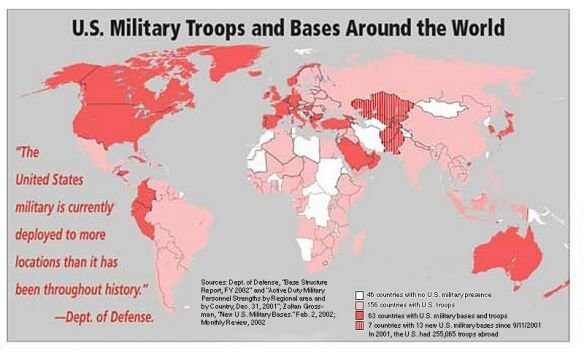
© tonyseed.wordpress.com
Us troops are present in 156 countries
Us troops are present in 156 countries
While it's a necessary exercise to be fully aware of the inanity of imperialism, it remains incomplete. To paraphrase Albert Camus, the revolted man says 'no' to the existing world but he also says yes to something else, to a better world. So, the next natural step is to propose an alternative: a new political and social model that deeply resonates with the human values we all must embrace.
This is an exercise of thought and also an exercise of hope, and there's not much to lose, because no matter how imperfect this sociopolitical model is, it's unlikely to be as destructive as its predecessors, no matter how hard we try!
The idea to write this article came from a discussion on our forum titled "Hope, fear, and the future". One of Joe Quinn's contributions in this thread brought to light a key point: This idea grew further while reading Alexander Dugin's excellent work: "the fourth political theory". There are several similarities between both models. But, unlike Dugin who proposes a strategy to transition from the current liberal world to his fourth political model, we solely focus here on the specifics of our ideal world after transition. That's why our model is called "postimperialism".
Our hypothesis is that the US empire will soon collapse and may bring with it most of the planet. This global catastrophe may be due to intervention of the human and/or cosmic variety. Postimperialism proposes a model of society that could flourish after this major reset.

Bilbo Baggins' house in the Shire
I was surprised to see how much thought all of us had already given to this topic, and how much extra thinking we gave during those conversations. It suggests that indeed there's a deep craving in all of us for a better world, and that it goes beyond a mere unrealistic dream. Indeed, you will find below many very operational and concrete ideas that are definitely worth testing.
So this is the way we came up with the features of our ideal society. This is, by definition, an incomplete work that must evolve in an organic way. It's a first step aimed at planting a seed in the reader's mind and encouraging him/her to think about this ideal world. And let's face it: every great (and not-so great) achievement in this world started with an idea, a flash of imagination or inspiration that informed the process that became the foundation of its realization.
Postimperialism at a glance
Despite the obvious destructive effects of communism, capitalism and socialism, we should not throw the baby out with the bathwater. Our 'post-imperialism' aims to keep the positive aspects of any of the past ideologies while, of course, discarding their destructive constituents.
Let's also keep in mind that the nefarious effects of said ideologies may be due less to their intrinsic nature than to the way they were applied to societies by pathological leaders.
At a business level a form of controlled capitalism prevails. Regulations prevent the usual pitfalls of past capitalism, namely speculation, monopolies, lobbying, industrial pollution, programmed obsolescence, unethical advertising, capital/labor imbalance. Within this regulatory framework, fair trade and supply and demand rule the exchange of goods and services, while the weight of bureaucracy is kept to a minimum in order to ensure fluid, quick and efficient business activities.
At a state level, post-imperialism implements a mostly socialistic policy. Taxes fund a welfare state, that redistributes wealth and offers free education, health care and transportation. It also controls key industrial sectors like energy and mining. The state aims to create the best legal, administrative and fiscal environment for communities to develop harmoniously
At a community level, a positive form of communism is applied. Communities are the core constituent of the postimperialistic society. They are highly autonomous, raise their taxes, own lands and building and have their own militia and government and are therefore the core unit of society. The most important feature of post-imperialistic communities, however, may be immaterial and relate to the very high level of cooperation, help, sharing, trust and solidarity that would prevail between each of its members.
So let's start our transcription of the Q&A sessions with this topic of communities. Comments developing the proposed solutions and/or comparing them with the current state of the world have been added to some answers.
Community and family life
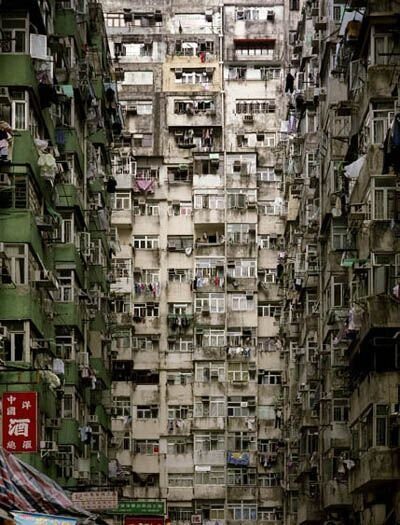
Kowloon walled city (Hong Kong) hosted 33000 residents over 6.4 acres.
A: Demographic density is limited. If a community reaches the maximum density, a couple planning to have babies will have to move to a less populated area. The population of communities is also limited to 3,000 individuals, allowing everyone to know everyone else. Such a size should allow a critical mass of necessary and complementary skills. Q: Are the communities autonomous relative to the state?
A: Yes. The state defines a broad legal framework, communities are free to set rules and customs as long as they are compliant with this framework. Communities, as extended local families, are the fundamental unit of the post-imperialist society. Q: Are there armies?
A: Yes. each community has its own militia. Only members of the community can become soldiers. They'll train 1 weekend per month and 2 weeks in summer. Communities may provide troops to act in the name of the state for a specific mandate and a specific duration, but also retain the right to refuse involvement in collective military action. Q: Since states don't have armies they can't start war, but what about communities that do have militias can they start a war?
A: Any community leaders who exhibit consistent belligerent behavior will be removed from power by the collective action of other communities. Citizens will be asked to elect a new representative. If a belligerent leader is elected again, he will be removed from power, an inquiry will be conducted to identify the cause of belligerence. One remedy to further belligerence is to disperse the belligerent community in other communities that are far away from one another. Q: Are there women in the army?
A: Yes, but women can't have a position requiring over-strenuous physical efforts. The same applies to any working position.
Q: What about other leisure activities?
A: Club activities are an important part of community life. Communities offer a variety of clubs (arts, sports, hobbies). The focus being enjoyment, learning, bonding.
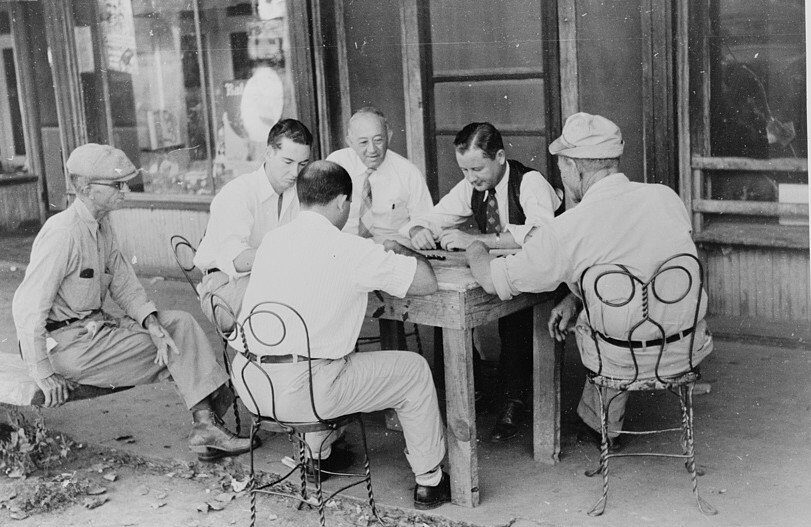
© Marion Post Wolcott
Men playing dominoes. Mississippi 1939.
Men playing dominoes. Mississippi 1939.
A: Yes. Parades, parties, exchanges, exhibitions, meals, heroes celebrations etc. are organized at an inter-community level. Q: Is there any meditation/inner reflection activity?
A: Yes; Such activity is conducted at a community level. Regular meetings are offered. Classes are organized according to age/seniority groups. Q: Is there any sport in post-imperialism?
A: Yes, but it is exclusively a leisure activity. No money is involved, no community 'points' can be earned. The cultural norms lessen the competitive dimension of community life and reinforce the cooperative/leisure/health aspects. Sport activities are mostly conducted at a community level.
Q: What are the rules concerning marriage and procreation?
A: Procreation occurs at a physical level while marriage should be at a soul level. Thus anyone can marry anyone and divorce is legal. However only heterosexual married couples can adopt children and raise them. Before having children, heterosexual married couples have to attend parenting classes and go through a 5 year probation period as a general rule.

Most of our psychological make-up is defined by our earliest experiences. Nurturing and bonding are prime causes of psychological health.
A: Yes, mothers have a 3 years leave during which they still receive their salary. Q: Can you marry outside your community or country?
A: Yes. In this case the couple may choose in which community/country they live. If necessary, the 'foreign' spouse' will be encouraged to learn the local language. Q: Can an individual move from one community to another one?
A: Yes, but the destination community must accept his application and before that it must take notice of the report written by the mother community about the applicant. Only individuals with a sufficient number of community points can apply to the transfer process. Money, loans and banking
Q: In Post-imperialism, is there any money?
A: Yes but its use is restricted to trade. Its accumulation is limited and it can't be used for speculative purposes. There's one single gold-backed currency for the whole world. States have the exclusive right of creating money and lend it without interest to the communities. The communities lend to businesses without interest. Interest doesn't have to be paid because the companies benefit the community through added value, job creation and taxes.

Until 1971, the US dollar was backed by gold or silver
A: Yes. Transactions that are instantaneous and local do not require the use of currency. Such transactions are common since local trade (within one community or between nearby communities) is highly encouraged. It reduces pollution and delays.
In addition, community trading systems are available. They use interest-free local credit so direct swaps do not need to be made. For instance, a member may earn credit by doing childcare for one person and spend it later on carpentry with another person in the same network. Transactions are recorded in a central location open to all members. Q: Is there a stock market?
A: No, prices (commodities, manufactured goods, services...) are simply defined by the agreement between buyer and seller. Q: Can individuals borrow money?
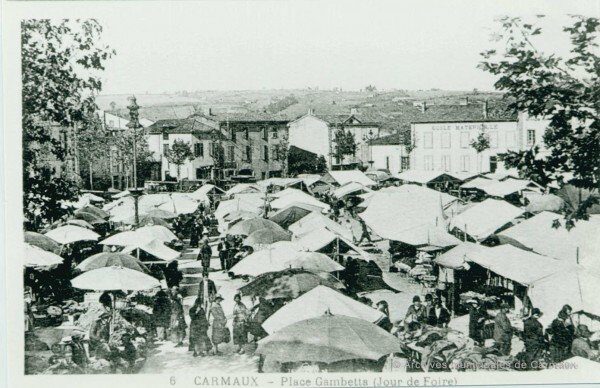
Marketplace Carmaux, France.
Until recently, the Church and the marketplace where the main socializing places.
A: There are only local branches of the state owned central bank. Any speculative activity is prohibited. Cash is used as well as checks and debit cards. Credit cards are prohibited. Q: Is there any tax?
A: Yes. The same 10% flat tax rate is applied to businesses and citizens alike. Work & Businesses
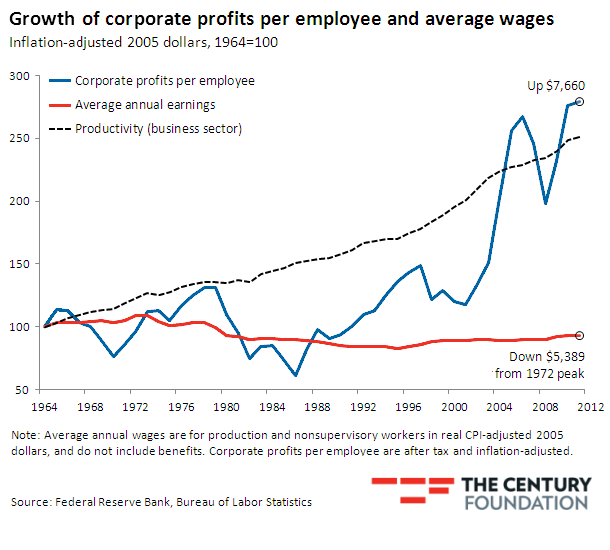
Since 1972, wages are dropping while corporate profits are rising
A: Yes, the maximum size will be defined according to the size of the market, economies of scale, labor intensity, number of employees, profitability. As a general rule, companies will be family-sized. This maximum size will de facto create a profit cap and limit the dis-balance between capital and labor. Q: Who owns the capital?
A: Companies are exclusively owned by members of the community. Shares are distributed according to the input of each founding member. Input is not restricted to money, but can also take the form of ideas, labor, assets, expertise, etc. Q: Where does international trade occur?
A: There are marketplaces like Amazon but they are publicly owned.

Time Square, New York City.
A: Yes, but its content is limited to objective facts about the products. Billboards can only be placed on the advertiser's rented land and their maximum size is limited. Companies can print leaflets and commercial magazines and distribute them. Q: Is there TV?
A: Yes. TV is publicly owned. There is no advertising. Channels deliver educational, inspiring, entertaining programs within a socially acceptable context. Q: How is industrial production organized?
A: As a general rule, mechanization is limited. There should be at least 50% direct human intervention in any production process. Below this level production is too dehumanized. Q: What are the working conditions?
A: All workers have the same salary. Equivalent to the purchase power of 2000 euros in the countryside of Western Europe. People work 5 hours per day, 5 days a week. In addition 1/2 day is dedicated to community work. Q: Are there any holidays?
A: Yes. In addition to regular weekends, there is one 3-day weekend every month. Every worker has 3 weeks (21 days) of paid holidays per year in addition to community/national holidays. Within companies, holidays are scattered in order not to disrupt production flows. Workers with the highest number of community points have the first pick.
Children have 1 week holiday from school every three months and in addition do not attend school during their parents holidays. Q: What about retirement?
A: Minimum retirement age is 55 years old, but it is optional and any individual can decide to work longer. During his career, the worker gives 3% of his income to a retirement fund. This funds invest the collected money as follows: 20% in community business, 80% in the gold-backed currency.
© Frugal dad
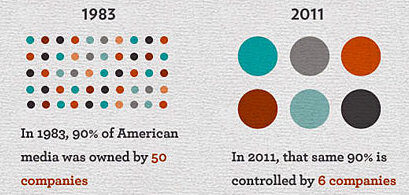
In 1983, 90% of the media was owned by 50 private companies. In 2012, it was owned by only 6 companies.
In 1983, 90% of the media was owned by 50 private companies. In 2012, it was owned by only 6 companies.
A: The media is controlled by people through the state. Journalists are voted by people through the state. Only people having reached moral and technical qualifications can be candidates. Witnesses and elders feedback are part of the evaluation process. The profession is sacrosanct, journalists have total freedom to tell the truth, but if they breach this fundamental rule, penalties are doubled compared to a "normal" citizen. Q: How does the health industry work?
A: No private company is allowed to operate in the health sector. Hospitals, clinics, research labs etc. are publicly owned and operated. Doctors are public servants. During their studies doctors are exposed to a holistic approach, mind-body connection, psychology, natural remedies. Becoming a doctors leads to the attribution of community points. Good doctors (as evaluated by patients) receive more community points. Q: Is production of goods driven by profit maximization?
A: No, the only goods that can be produced should meet standards of functionality, durability and beauty. They also have to comply with the 50% direct human work rule. Profit and wealth will not be a driver because on a cultural level they will not be glorified anymore. The main value will be contribution to the community. Q: Is growth rate an end?
A: No. Quality matters, not quantity. One of the reasons why the Empire collapsed was the exhaustion and pollution of natural resources due to overuse. In post-imperialism there is a general policy of conservation. Natural resources are gifts from the Earth. They are precious and can only be used in a lasting, careful and respectful ways. Q: Can private operators exploit natural resources?
A: Natural resources are publicly owned. No private profit can be extracted from the exploitation of the planet's resources.
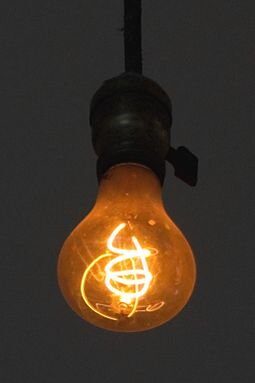
The centennial light bulb runs since 1901.
A: No. Anything produced in post-imperialism must comply with standards of functionality, durability and aesthetics. Besides mass production won't be possible because of the cap on company sizes.
Q: Is there some kind of profit cap or wealth cap?
A: Profit is naturally limited because the size of companies is limited. There's no wealth cap per se but there is death duty. If the estate owned by a citizen is more than three times larger than the average estate in his community, death duty will be 50% of the amount above three times the average estate. Half the funds collected this way go to the state (education, health, infrastructures...), the other half goes to the community. Supranational and national levels
Q: How are the borders of a nation defined?
A: Within a nation, the same language and culture are shared. The size of nations is limited to a maximum of 3 million citizens.
© DW
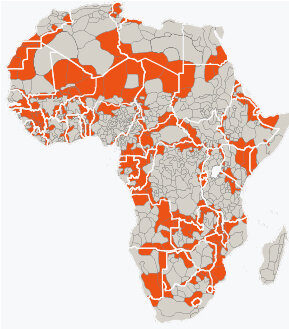
White lines: borders set by European powers, Orange: partitioned ethnicities
White lines: borders set by European powers, Orange: partitioned ethnicities
A: Yes they all follow the same fundamentals of conscience but differ on the cultural level (language, rites, traditions, heroes,...)
Q: Are there supranational entities?
A: Yes. Its mission is to maintain a fair balance between the nations. It doesn't have its own army but receives contributions of troops from member nations for a specific mandate and time. Voting is anonymous to discourage any form of pressure. Each nation has two representatives. The organization acts a sheriff of the planet and insures that each country behaves in a fair way relative to other countries.
Q: How autonomous are nations relative to the supranational entity?
A: Apart from the point mentioned above, nations are totally free to make their own decisions. All nations share a very similar moral consciousness and value set. Within this moral framework each nation, depending on its history, culture, language and traditions, makes social and legal decisions in harmony with the cultural specifics of the nation. Individuals
Q: How is psychopathy dealt with?
A: Serious research is conducted on this topic. Particularly the diagnosis. There is strong parent training and community help to insure that every citizens has a good knowledge of the topic. Also the limited size of communities, nations and companies should help spot psychopaths. Now, how to deal with psychopaths once spotted is a very problematic and fundamental question. The proper solution is still a work in progress.
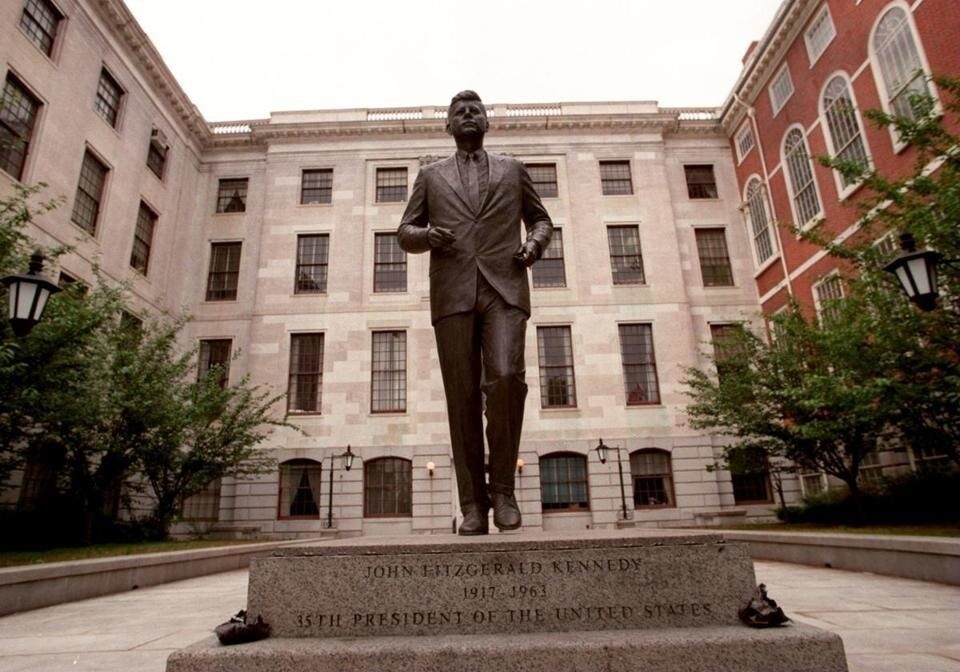
© File/1995
JFK bronze statue in front of the Boston state house
JFK bronze statue in front of the Boston state house
A: Definitely yes. Heroes are a fundamental part of culture. They are duly celebrated. But unlike modern society were psychopathic traits are glorified, it will be outstanding contributions to the community that will make a hero. Heroes can be celebrated at a community level, national level or international level. Q: Is school compulsory?
Yes. It is compulsory from 9 to 12. It provides the basic writing, reading and calculus skills. Then from 12 to 18, youngsters test what they like AND are good at. It occurs mostly through internship and practice. Of course any individual is free to study before of after compulsory ages. The mentor/ apprentice relationship is privileged. Q: What about computers?
A: Computers are still used but are dedicated to the acquisition of knowledge and communication.
Q: Is there an international language?
A: Yes. Any individual involved in an international activity has to be proficient. All citizens learn the international language at school.
Q: What happens to people who want to get a job but don't manage to?
Those people are helped by their family. If they don't have any family they will join houses for family-less individuals and join a 'family' of interest/value in there. Q: Can people own guns?
A: Citizens who have earned enough community points are allowed to own guns. Q: Are there recreational drugs?
A: Yes but only inside a walled 'drug' enclave. The production and sale of drugs is publicly owned. Drug users are free to go and stay in the enclave. As a general rule activities in the enclave can't generate community points.
Q: Is there prostitution?
A: Yes. Communities insure a reasonable level of security and hygiene for prostitutes and clients. Prostitution only occurs in a walled enclave and no community points can be earned in this enclave. Q: How is euthanasia handled?
A: If an individual is mentally apt and deems his suffering as unbearable, he can choose to be euthanized. The euthanasia methods that are the least painful will be proposed to him and he will choose the one he finds the most suitable.
Q: What about individuals who are not mentally apt?
A: If the family is willing to take care of the individual (with help of the community and state), he/she will be provided for indefinitely, but will be sterilized.
Q: What about suicide?
A: Suicide is handled in a way similar to euthanasia. Q: Is there any religion is post imperialism?
A: There's no religion per se but science has a strong focus on what is called the paranormal or metaphysics. This research identifies the rites and activities that strengthen the psychic connection between individuals and higher realities.

Outfit created by fashion designer Alexander Mc Queen
A: No, but any wastefulness is discouraged. There is no fashion industry which creates artificial obsolescence. As for other products, clothes are functional, durable and beautiful. Laws and regulations
Q: What happens to individuals who do not want to work?
A: They are expelled.
Q: Where are they expelled to?
A: They are confined in a walled enclave for rehabilitation.
Q: What happens in the walled enclave?
A: People go through classes, meetings, work, learning process. Throughout the process they are evaluated and given 'community points' according to their results. Once a specific number of points is earned, they are released. Greater crimes will require a greater number of points for a release to be pronounced. In the case of repeated offense, the number of points to be earned before release will be doubled.
Q: What about property?
A: Citizens can own houses and land. The community owns farmland and leases it. It also owns industrial land and leases it to companies. Public facilities (school, clinics, ...) are owned by the community and leased to the state. Q: What are the inheritance law?
A: If an individual has earned a sufficient number of community points, he/she is free to donate their estate to whoever they want. If the individual doesn't have enough points, they can't decide to whom to donate the estate. If the children have enough community points they'll get 100% of the estate, if the children don't have enough community points 50% of the estate will be donated to the community and the other 50% will be donated to the children.
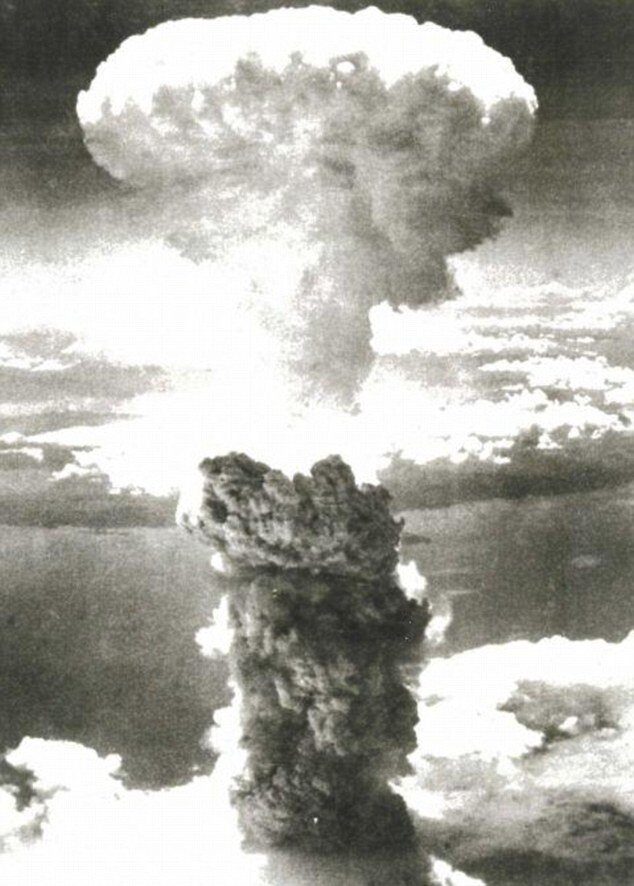
The first atomic weapon struck Hiroshima on August 6, 1945.
A: Biological, nuclear, chemical, energetic weapons are prohibited. This ban is enforced at the supranational level. This is one of the main missions of the supranational body. Q: Is there death sentence?
A: No, but an inmate can decide to be killed rather than being detained longer.
Q: What about underground discovery under land owned by an individual?
A: If it's natural resources (oil, gold...) it belongs to the community, if it's man-made it belongs to the citizen.
Plane spraying pesticides over industrial farming land
A: Yes. Only organic farming. All organic wastes are collected by community owned compost processing companies. Most food produced locally is consumed locally. Q: Who makes laws and political decisions?
A: Political decisions are made at the communal, national and supranational level. Decision making is based on two complementary bodies: the representatives who make the decision and the consultative body, which is composed of experts. Only individuals with a sufficient number of community points can be candidates to be representatives or experts. In addition, experts' proficiency is assessed by other experts. They earn the standard wage (2000 euros). Before any important decision the representatives consult the council of elders.
Q: How are representatives elected?
A: There are no political campaigns, meetings or speeches. Politics is not about popularity but competency and integrity. At a community, state and supranational level, the 10 individuals with the highest community points are proposed to be candidates (they can refuse, of course). At a community level, citizens vote for the candidates they don't want. Candidates are thus gradually eliminated until only one remains. The same process occurs at a state level, but in this case the representatives of the community vote rather than the citizens. Q: What is the council of elders?
A: Elders are individuals that have the highest number of community points. Their candidacy to the council can only be submitted by other members of their community. They are elected. Their power is exclusively consultative. They are consulted by the representative before any important decision is made.
Q: What is the energy policy?
A: Nuclear power is banned because of its hazards. Solar power, tide generators and geothermic power stations (etc.) will be privileged. Research in clean energy generation will be a priority. Above all, energy consumption will be reduced through public transportation, local trade, limited growth rates and energy efficient buildings.
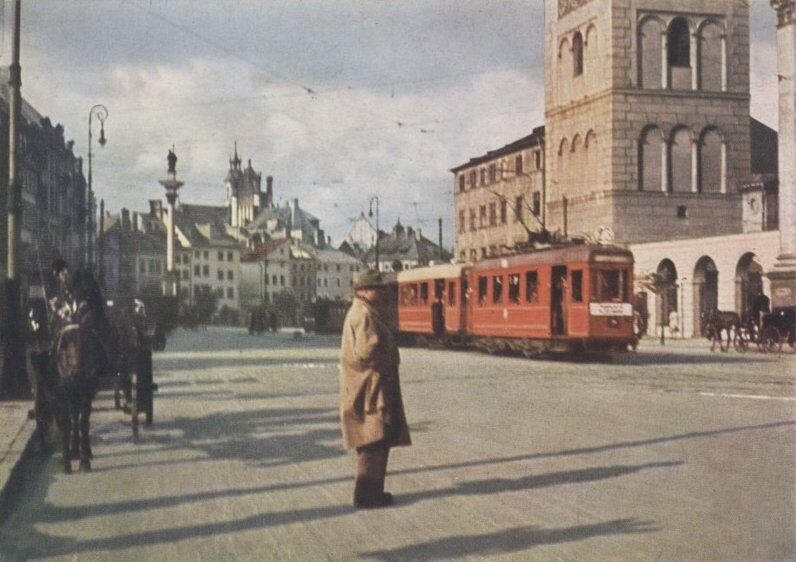
Varsaw tramway (1939).
In the 30's, western cities were already equipped with electricity powered tramways. Most lines were removed to give space to cars.
A: Public transportation is a priority. It is funded and operated by public authorities (communities and states). Trains, tramways and buses are the main mean of transportation of people. It is free. Plane transportation and interstate transportation will be minimal because most social and economic activity will occur at a community/inter-community level. Ships and trains are the priority solution for the transportation of goods and commodities. The extensive use of public transportation will minimize costs and pollution. Q: How is research conducted in the postimperialist world?
A: Research is a top priority and is publicly funded. It encompasses all fields including the paranormal and metaphysics. No diploma is required to conduct research but a sufficient level of relevant knowledge is assessed and validated by an expert committee. Reviewing is open (conducted by peers and the public). Reviews are not anonymous. Outstanding contributions lead to the attribution of community points. Q: How is pollution handled?
A: Pollution is a crime. As a general rule, deliberate or deliberately negligent pollution leads to the seizure of the culprit's assets (only leaving a minimum for living). It also leads to the loss of community points. Insurance contracts are compulsory (10% of assets value), the collected funds are pooled together in publicly owned insurance funds. Conclusion
Our bodies agonize under the growing burden of foul food, polluted water, pernicious prescription drugs, ruinous radiation and noxious air.
Our minds are split by the lies, the propaganda and the ignorance imposed by pathological elites.
Our hearts bleed at the sight of the imperialistic wars, the injustice, the rampant poverty, the generalized suffering.
Our souls are torn by a life that is disconnected and isolated from others and from the truth, where we are force-fed a 'spiritual' diet of nihilism and superficiality.
Meanwhile our planet shows growing symptoms of an oncoming major crisis: widespread sinkholes, strange atmospheric and earth sounds, an increase in volcanic and seismic events, chaotic weather and climate change, reduced solar activity and increased cometary activity.
In Earth Changes and the Human Cosmic Connection, we show a clear correlation between a crisis on the human/societal level and major natural catastrophes. In the past, times of general social decline and environmental chaos have signaled the end of a civilization cycle. At this point the question, therefore, is no longer whether our civilization will collapse in some way, but how it will collapse: which cosmic or human caused catastrophes will deliver the fatal blow?
From this perspective, it may not be premature to start thinking about a new world, one designed by and for people of conscience that might endure, rather than our current system, designed by and for pathologicals, that seems set to collapse under its own oppressive weight.


He then became an editor and writer for SOTT.net, fulfilling his dream of researching science, technology and history.
Pierre is a certified Eiriu Eolas instructor and the author of "Earth Changes and the Human Cosmic Connection".
No comments:
Post a Comment